
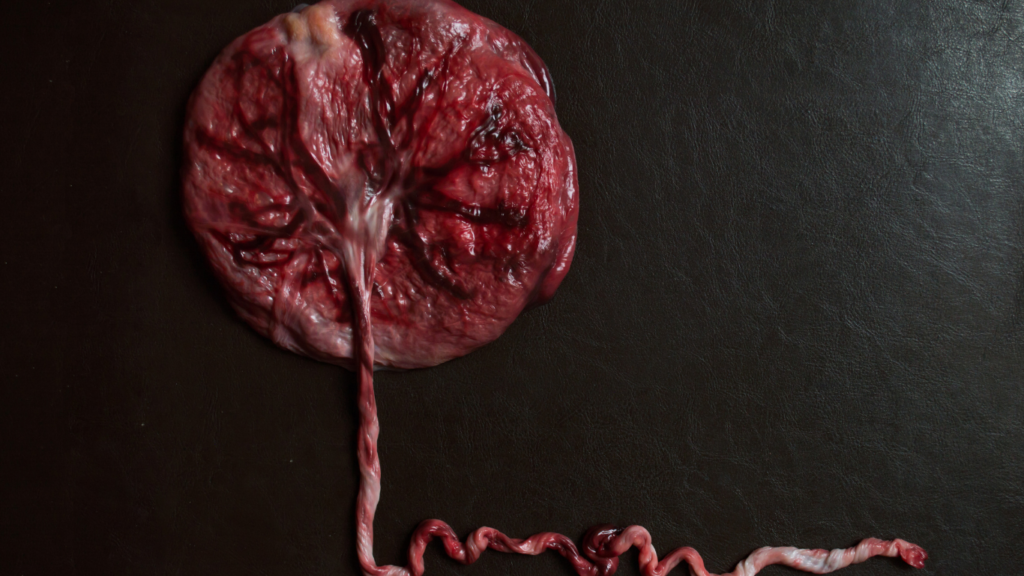
Placenta (in Norwegian: morkake) encapsulation, the practice of consuming the placenta after birth, has gained popularity among parents seeking natural ways to support postpartum healing, mood balance, and breastfeeding. While many report positive experiences, scientific evidence is limited, and certain risks, especially those related to lactation, deserve careful consideration.
This guide explores placenta encapsulation in depth, including its preparation, nutrient profile, potential benefits, risks, and how it may influence postpartum recovery and milk supply.
Understanding placenta encapsulation
What is placenta encapsulation?
Placenta encapsulation involves preparing the placenta so it can be consumed in capsule form. The process typically includes:
- Cleaning and steaming the placenta
- Dehydrating it at low heat
- Grinding it into a fine powder
- Filling capsules for daily use
The idea behind this practice is that consuming the placenta may return nutrients and hormones to the body, potentially supporting postpartum recovery.
Nutrient profile and physiological content
Nutrient density
A healthy 450‑gram placenta contains approximately:
- 234 calories
- 4 g fat
- 899 mg cholesterol
- 48 g protein
Minerals and vitamins
Dehydrated placenta may include:
- Iron (approx. 565 mg/kg)
- Selenium (approx. 850 µg/kg)
- Calcium, copper, magnesium, phosphorus, potassium, zinc
- B vitamins: B1, B2, B5, B6, B7, B9, B12
Hormones naturally present
The placenta contains high levels of:
- Estrogen
- Progesterone
- Oxytocin
- Cortisol
- Human placental lactogen (hPL)
- Corticotropin releasing hormone (CRH)
Bioactive components
Additional components include:
- Essential amino acids (leucine, lysine, valine)
- Growth factors (EGF, FGF)
- Placental opioid‑enhancing factor (POEF), linked to pain modulation in animal studies
Physiological effects: What does the research say?
Mood and postpartum depression
Some parents report improved mood, but controlled studies show little to no measurable difference in mood or depression risk compared to placebo.
Iron levels
A 2017 randomized controlled trial found that placenta capsules provide only about 24% of the recommended daily iron intake for lactating parents and do not significantly improve iron levels.
Milk production
Although older studies suggested placenta consumption might stimulate lactation, modern research shows no significant difference in milk volume or composition.
Pain relief
Animal studies show POEF may enhance natural pain relief, but this effect has not been confirmed in humans.
Risks and safety considerations
While the placenta is a nutrient‑dense tissue, it can contain:
Pathogens
The placenta is not sterile. It may contain bacteria such as Group B Streptococcus.
Contaminants
Placentas can accumulate heavy metals, including:
- Lead
- Mercury
- Cadmium
- Arsenic
Hormonal overload
High levels of estrogen and progesterone may:
- Interfere with early milk production
- Affect infant exposure through breast milk
- Increase clotting risks in susceptible individuals
Processing limitations
Steaming and dehydrating can destroy many heat‑sensitive nutrients and hormones, reducing potential benefits.
The Breastfeeding process
Signs placenta encapsulation may affect milk supply
Monitor for:
- Low milk production
- Baby not gaining weight as expected
- Long or ineffective feeding sessions
- Persistent fussiness or hunger cues
If these signs appear, pause capsule use and consult a lactation professional.
When to call a professional
Seek help if:
- Feeding is painful or ineffective
- Your baby is not gaining weight
- You suspect low milk supply
- You’re unsure whether placenta capsules are affecting lactation
Role of postpartum support
How to Prepare for Postpartum Recovery (With or Without Placenta Encapsulation)
Take postpartum and feeding education
- Attend breastfeeding – newborn feeding classes.
- Understand the normal postnatal recovery process, newborn feeding patterns and early cues.
- Build confidence in troubleshooting common challenges.
Create a postpartum plan
- Outline preferences for recovery, feeding, and support.
- Stay flexible. Needs often change after birth.
- Keep contact information for lactation consultants, midwives, and healthcare providers.
Involvement of partners and family
Partners and family can:
- Offer emotional support
- Help with household tasks
- Encourage rest and hydration
Their support should align with your preferences to reduce stress.
Midwives and Lactation Consultants
These professionals:
- Observe feeding patterns and offer support with common challenges
- Assess your postnatal recovery and your baby’s growth and development
- Identify whether feeding issues are related to latch, milk supply, positioning, or external factors
- Provide guidance before and after any changes you make, including pausing or stopping placenta capsules
Common concerns and questions
Does placenta encapsulation benefit everyone?
No. Reported benefits vary widely, and research does not strongly support most claims.
Can placenta capsules affect breastfeeding?
Yes. Hormonal components, such as oestrogen, may interfere with early milk production for some parents.
Is placenta encapsulation safe?
There are documented risks, including infection and exposure to contaminants. Discuss these with your healthcare provider.
Can I stop taking placenta capsules if I notice feeding issues?
Yes. Many lactation consultants recommend pausing capsule use if milk supply concerns arise.
Are there alternatives for postpartum recovery?
Yes. Rest, nutrition, hydration, emotional support, and professional midwifery and lactation guidance are evidence‑based ways to support recovery.
Nikoletta Lis
Midwife, MPH, IBCLC
References
Benyshek D., Bovbjerg M., & Cheyney M. Comparison of placenta consumers’ and non-consumers’ postpartum depression screening results using EPDS in US community birth settings (n=6038): a propensity score analysis. BMC Pregnancy Childbirth 2023;23
Johnson S., Pastuschek J., et al. Impact of tissue processing on microbiological colonization in the context of placentophagy. Scientific Reports 2022; 5307
Elisama de Oliveira Morais P., Santos Nassif M., et al. Online scientific research on placentophagy: a bibliometric analysis. Rev Bras Ginecol Obstet. 2024; 46
Young S., Gryder L., et al. Effects of placentophagy on maternal salivary hormones: A pilot trial, part 1. Women and Birth 2018; 4
Johnson S., Pastuschek J., et al. Placenta – Worth Trying? Human Maternal Placentophagy: Possible Benefit and Potential Risks. Geburtshilfe Frauenheilkd 2018; 78
Gryder L., Young S., et al. Effects of Human Maternal Placentophagy on Maternal Postpartum Iron Status: A Randomized, Double-Blind, Placebo-Controlled Pilot Study. Midwifery Womens Health 2017;62
Hayes E. Consumption of the Placenta in the Postpartum Period. JOGNN 2016; 1
Young S., Gryder L., et al. Human placenta processed for encapsulation contains modest concentrations of 14 trace minerals and elements. Nutr Res. 2016; 36
